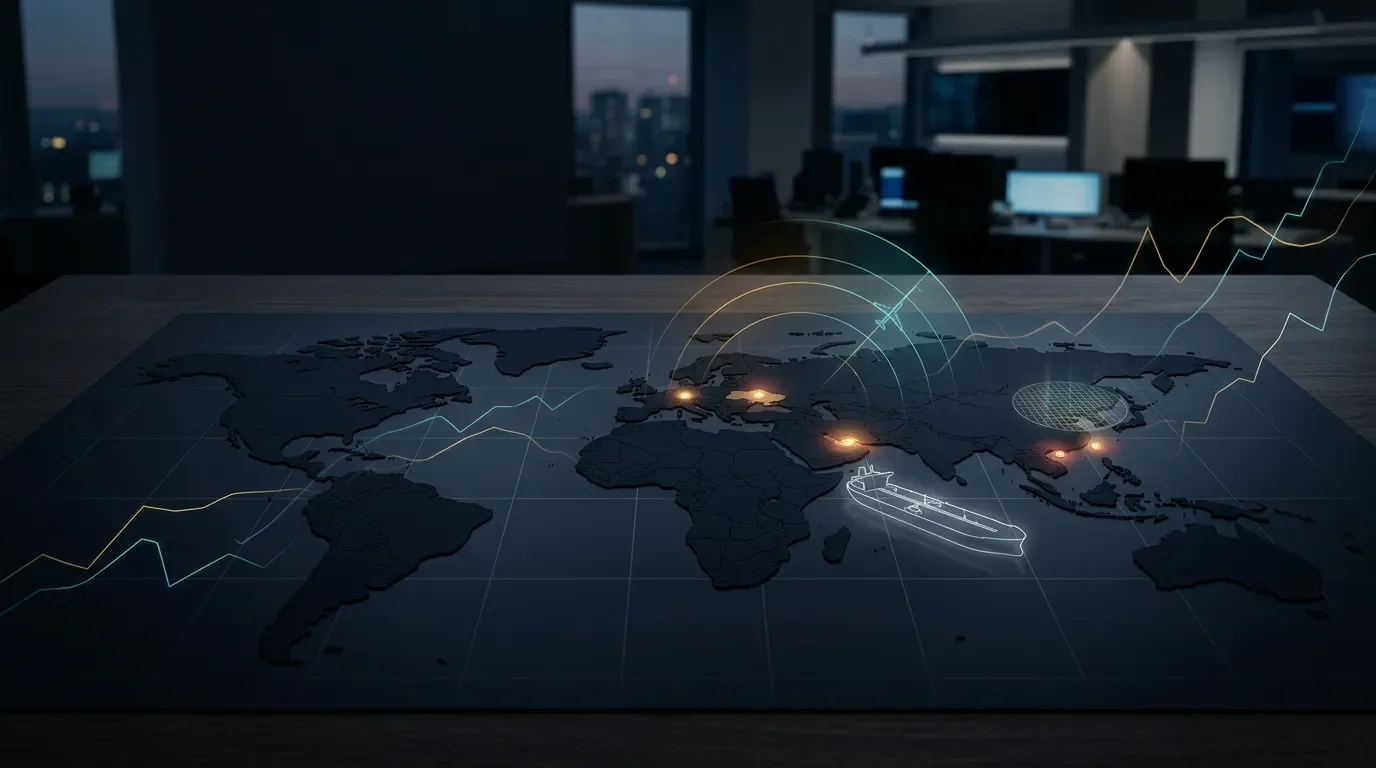
Geopolitics Daily Brief — June 16, 2026
Five story brief: Hormuz reopening remains a shipping-confidence test; Lebanon is not yet cleanly inside the Iran ceasefire; Ukraine's air-defence gap moves to the G7 table after a 70-missile, 611-drone Russian attack; U.S.-China tech rules now affect auto model-year planning; and Taiwan's defence-budget fight slows domestic drones and missiles.

This morning's brief is anchored by the same variable running through all five stories: how fast governments and companies can translate geopolitical announcements into actual operating conditions. The Iran-Hormuz deal is signed but not yet trusted by shippers; Ukraine's air-defence gap is now a G7 problem; U.S.-China technology rules are moving from headline risk into model-year planning; and Taiwan's defence budget fight is narrowing the gap between strategy and procurement.
| Story | Theatre | Immediate read |
|---|---|---|
| 1 | Middle East / energy | U.S. and Iran say an interim deal is signed, but shippers still expect weeks before Hormuz traffic normalises. 1 |
| 2 | Middle East / Lebanon | Israel is not party to the U.S.-Iran talks and says it will keep forces in southern Lebanon. 1 |
| 3 | Russia-Ukraine | Russia launched 70 missiles and 611 drones overnight; Zelenskiy is taking the air-defence request to G7 leaders. 2 |
| 4 | US-China | Connected-car rules are forcing Ford and peers to seek U.S. licences for China-built models, while broader technology designations keep legal risk elevated. 3 |
| 5 | Taiwan Strait | Lai says he will not give up on defence spending after parliament approved only two-thirds of the requested $40 billion package. 4 |
1. Hormuz reopening is the deal's first credibility test
- U.S. President Donald Trump said a preliminary U.S.-Iran agreement had been signed; Iran's President Masoud Pezeshkian called it an important step, while saying a final truce has not yet taken shape. 1
- The interim accord would extend the April ceasefire by 60 days and reopen the Strait of Hormuz, which Iran has effectively blocked since the U.S. and Israel attacked Iran in February. 1
- Shipping confidence is the hard part: Mitsui O.S.K. Lines' CEO told the Financial Times that owners may need at least a couple of weeks, if not a month, before returning through the strait. 1
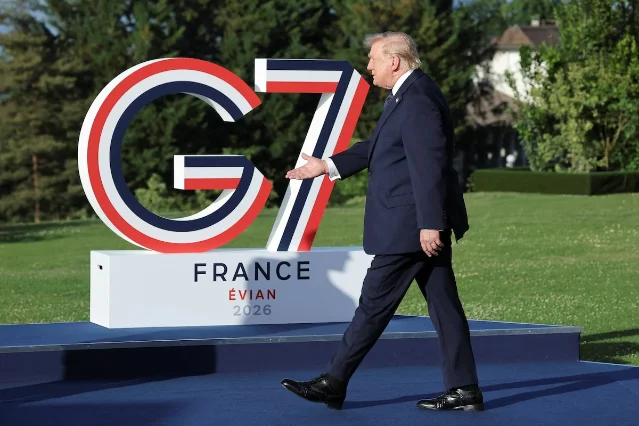
Market / supply-chain impact: Brent steadied near $82.96 a barrel in Asian hours, down 0.3%, after the first relief move; the more important signal is that oil, LNG and tanker risk premia may not fully normalise until insurers and shipowners see sustained safe passage. 5 For energy buyers, this argues for treating Friday's planned full reopening as an operational milestone, not a completed supply-chain reset. European leaders are also discussing a possible Franco-British-led maritime mission and alternative routes around Hormuz at the G7, which keeps security guarantees central to pricing. 6
2. Lebanon remains outside the clean ceasefire story
- Iran says the deal requires a full halt to hostilities in Lebanon; Israeli Prime Minister Benjamin Netanyahu says Israel will keep forces in southern Lebanon and retain the right to respond to Hezbollah attacks. 1
- A U.S. official told Reuters that Israeli withdrawal from Lebanon is not a condition of the agreement. 1
- Reuters reports that the Israel-Hezbollah fighting has uprooted 1.2 million people, making the Lebanese front a political and humanitarian constraint on any wider de-escalation. 1
Market / supply-chain impact: The Lebanon carve-out matters because energy markets are no longer pricing only the strait. If Israel and Hezbollah keep trading fire, Gulf maritime confidence can improve while Levant risk remains elevated for insurance, aviation routing, reconstruction assumptions and Eastern Mediterranean logistics. The deal reduces one bottleneck, but it has not yet converted the wider regional war into a durable security regime.
3. Ukraine's air-defence gap moves to the G7 table
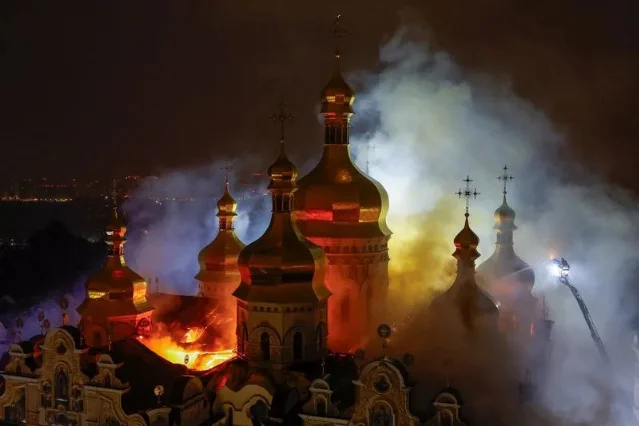
- Russia's overnight attack killed 10 people nationwide and badly damaged the Kyiv Pechersk Lavra, a UNESCO World Heritage site founded in 1051. 2
- Ukraine's military said Russia launched 70 missiles and 611 drones, and that Ukrainian air defences shot down 50 missiles and 582 drones. 2
- Air Force spokesperson Yuriy Ihnat said ballistic missiles remain a problem after Ukraine shot down only 15 of 34 ballistic missiles; Zelenskiy said he would appeal to G7 allies for more air defences. 2
Market / supply-chain impact: The immediate commercial read is defence demand, not commodity shock. Patriot interceptors, radar, counter-drone systems and layered air defence remain the procurement bottleneck. At the G7, European leaders want to persuade Trump that Ukraine's position has strengthened and that talks with Russia should be paired with tighter sanctions and more military support for Kyiv. 6 For suppliers, that points to continued demand for missile defence and drone-countermeasure capacity even if diplomatic language improves.
4. U.S.-China tech friction is showing up in auto planning
- Ford confirmed it has asked the U.S. Commerce Department for authorisation to keep importing its China-built Lincoln Nautilus SUV. 3
- The Nautilus software is developed in the U.S. but installed in China, which triggers approval under rules banning most Chinese-developed or Chinese-maintained software in connected vehicles. 3
- Separate U.S. hardware restrictions take effect for model year 2030, and GM has set a 2027 deadline for some suppliers to remove China-sourced parts from their own supply chains. 3
Market / supply-chain impact: This is the clearest example today of geopolitical risk becoming a production-calendar problem. Automakers have months, not years, to resolve model-year 2027 software exposure, while the 2030 hardware rule requires a deeper vendor-map rewrite. The pressure sits alongside the Pentagon's updated Chinese military-company list, which includes Alibaba, Baidu, BYD, NIO, CXMT, YMTC, WuXi AppTec, RoboSense and Unitree; the list is not a sanctions regime, but it restricts Pentagon contracting and sends a warning signal to government suppliers. 7
5. Taiwan's defence budget fight narrows the drone question
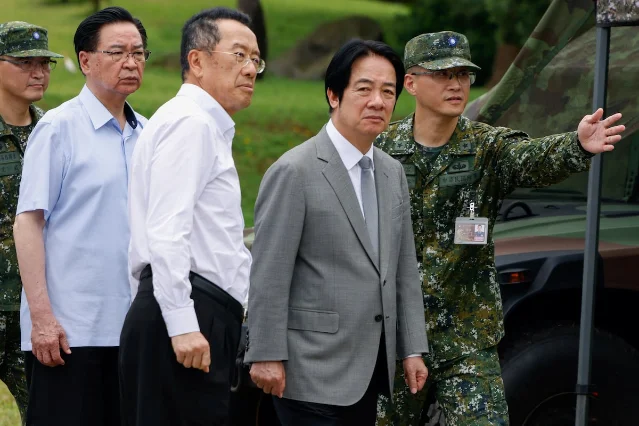
- Taiwan President Lai Ching-te said he would not give up on raising defence spending after parliament approved only two-thirds of a $40 billion supplementary budget. 4
- Parliament approved purchases of U.S. weapons but vetoed funds for domestically made drones and missiles, which Lai says Taiwan needs for deterrence. 4
- Lai wants defence spending to reach 5% of GDP by 2030, up from around 3%, and visited radar stations around Taipei that monitor Chinese movements. 4
Market / supply-chain impact: The short-term risk is procurement sequencing. Taiwan can still buy U.S. systems, but the domestic drone and missile veto slows the asymmetric layer that U.S. officials have been urging Taipei to build. For chip and electronics supply chains, the point is not that a new crisis has begun today; it is that Taiwan's defence capacity is now a budget-execution issue. That matters for insurers, inventory planners and firms deciding how much redundancy to build outside the island.
References
- 1US-Iran deal promises end to war but how it will work remains unclear
- 2Historic Ukrainian monastery damaged, 10 people killed in Russian attacks
- 3US connected-car rule prompts Ford, other automakers to seek licenses for China-built models
- 4Taiwan president says he 'won't give up' on defence spending after parliament cuts
- 5Asia markets temper Iran deal optimism, BOJ hikes rates
- 6Europeans to test Trump on Iran deal risks, urge Ukraine rethink at G7
- 7US says BYD, Baidu, Alibaba and other tech giants are aiding China's military
Add more perspectives or context around this Post.